
Introduction: Why Criterion Matters for Sci-Fi
Have you ever spent twenty minutes scrolling through a streaming service, only to give up and watch something you have seen before? You are not alone. With so many platforms fighting for your attention, finding a great sci-fi film can feel like a chore. That is where Criterion steps in.
The Criterion Collection has spent decades doing something algorithms simply cannot do. It curates movies by hand, one at a time. Every film in the collection earns its spot based on artistic merit, not just trending popularity.
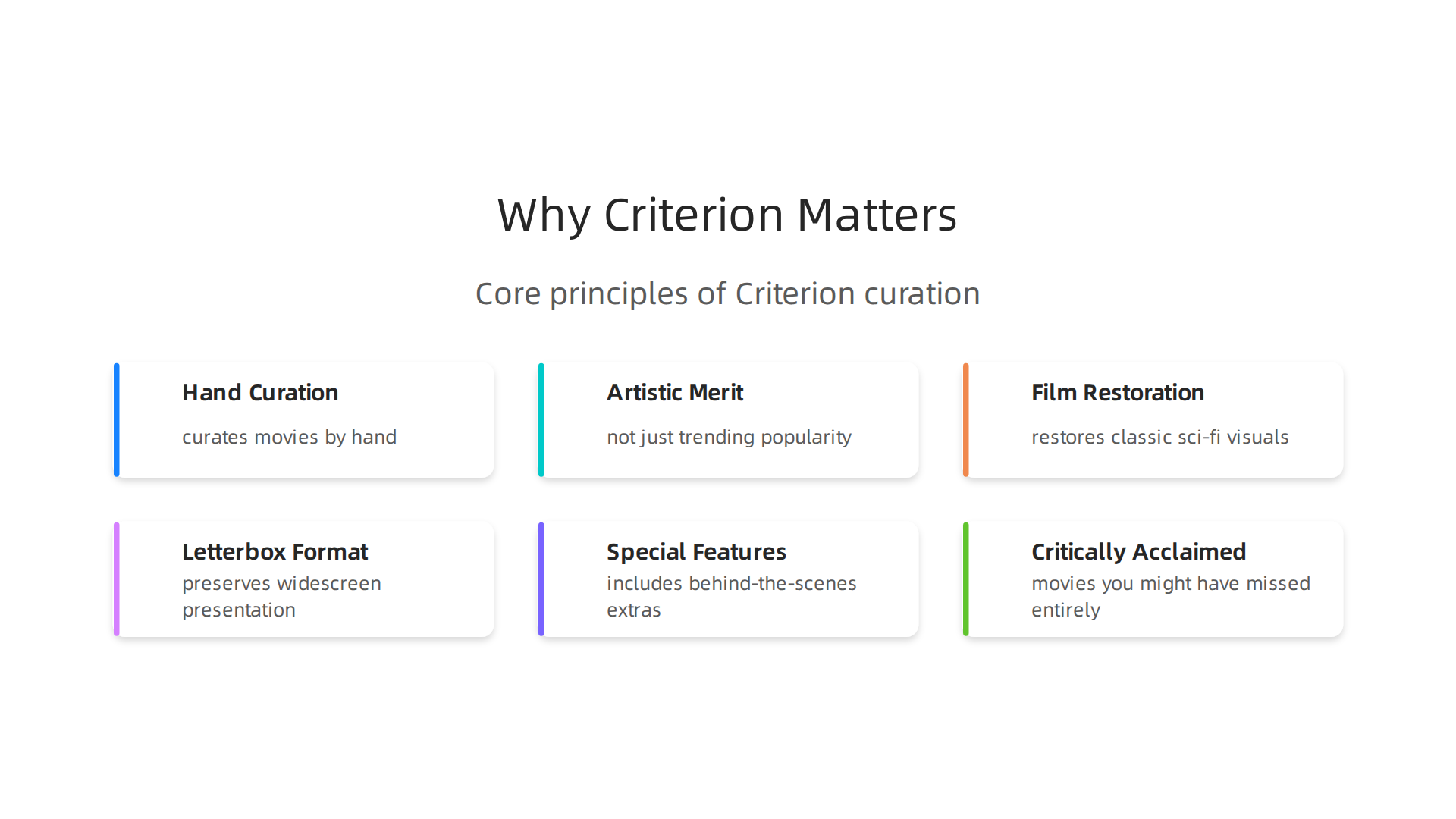
As Criterion explains on its FAQ page, the team makes inclusion decisions on a case-by-case basis without letting market factors decide what belongs.

That human touch is rare in 2026.
For sci-fi fans, this approach changes everything. Criterion has helped set the standard for film restoration and the letterbox format for widescreen films. That means classic sci-fi fantasy movies look the way their directors intended. You get crisp images, careful color grading, and sound that pulls you into another world. And the special features? They open up the story behind the story. You learn how the filmmakers pulled off that mind bending effect or why a "Seven movie" like The Seventh Seal still influences sci-fi directors today.
Think of Criterion as a trusted friend who knows film history inside and out. Instead of feeding you more of the same content, Criterion introduces you to critically acclaimed movies you might have missed entirely.

It opens the door to everything from space operas to strange indie sci-fi fantasy movies that push the boundaries of the genre. That is the power of smart curation.
This list is built for people who want more than just the latest hit. If you are tired of searching and ready to discover essential, human-curated sci-fi cinema, you are in the right place. And if you enjoy stories that mix big ideas with sharp humor, check out The Ridiculous, a body-swap sci-fi comedy that brings the same playful spirit you love in genre bending films.
1. Brazil (1985) – Terry Gilliam’s Dystopian Masterpiece
If you have ever felt crushed by red tape or watched in disbelief as a system made zero sense, Brazil will hit uncomfortably close to home. Terry Gilliam’s darkly comic vision of a bureaucratic nightmare feels even more real in 2026 than it did in 1985. The film follows a low-level clerk named Sam Lowry who daydreams of escaping his dull life, only to get tangled in a terrifying government machine. It is not just a movie. It is a warning wrapped in black humor.
Criterion’s edition of Brazil is the definitive way to experience it. They worked with Gilliam to create a new 4K digital restoration of the director’s cut, making every strange, claustrophobic corridor look crisp and intentional.
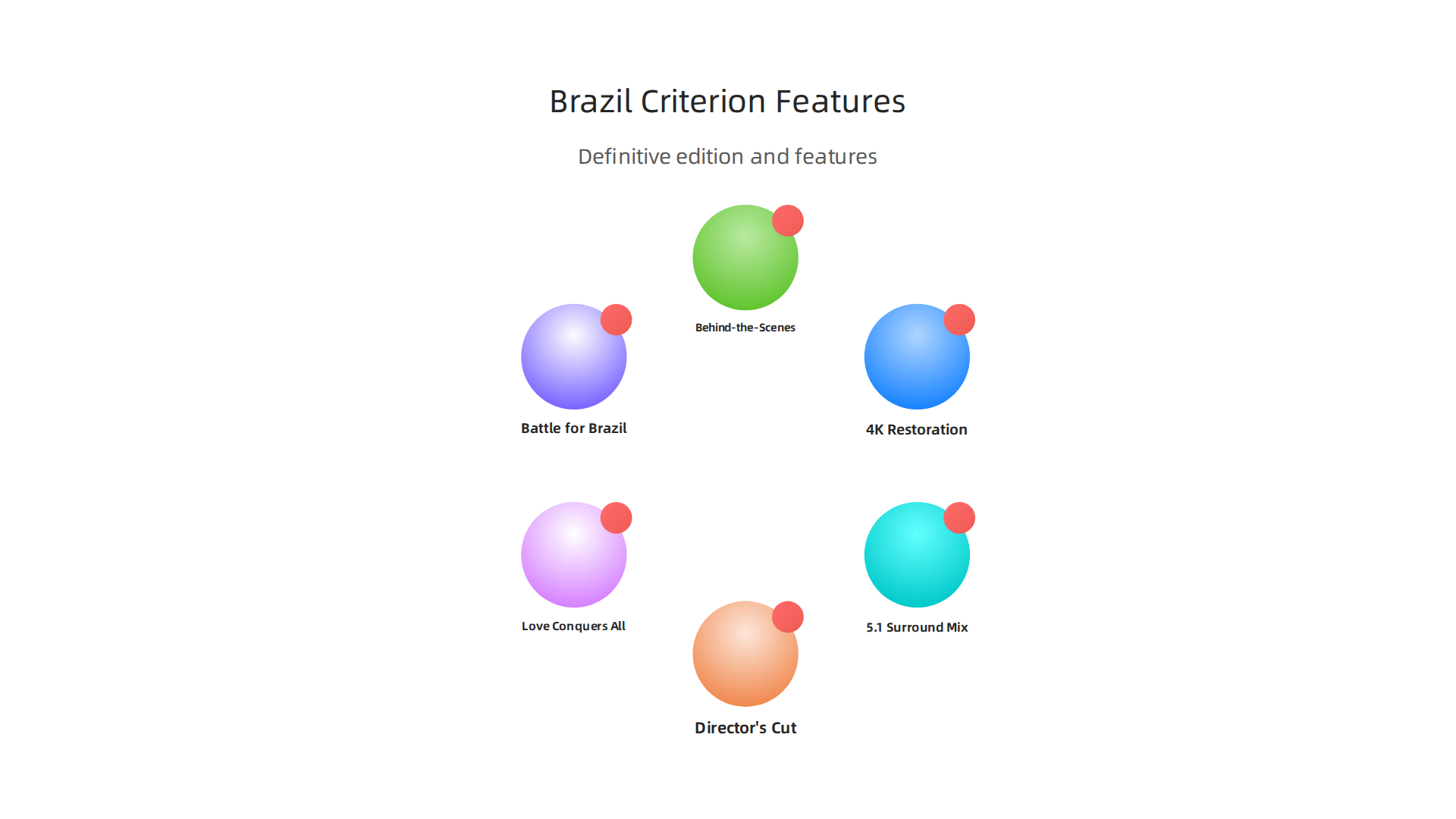
The 5.1 surround mix (also available in 2.0) pulls you into the noisy, oppressive world. And you get choices: the 142-minute director’s cut is the main event, but the set also includes the 131-minute “love conquers all” version. It is a film school in a box.
The supplements are just as essential. Criterion includes a documentary called The Battle for Brazil, which tells the story of Gilliam’s fight to release his version. That fight alone is as dramatic as the movie itself. You also get behind-the-scenes featurettes and an essay that digs into the film’s satirical bite.
If you love movies that use comedy to take apart ugly systems, you should also check out our guide to the best comedy movies that mastered satire and parody. Brazil belongs right at the top of that list.
And if you want more stories that mix sharp humor with wild genre twists, don’t miss The Ridiculous, a body-swap sci-fi comedy that keeps the same playful, rebellious spirit.
2. The Day the Earth Stood Still (1951) – The Classic Alien Warning
If you grew up thinking all aliens came to destroy us, this movie will change your mind. The Day the Earth Stood Still landed in 1951 with a simple but powerful idea: an alien shows up not to attack, but to warn us. And that warning is still urgent today.
The story follows Klaatu, a calm visitor from another world, who arrives in Washington D.C. with a robot named Gort. He brings a message of peace, but also a threat: if humans keep fighting, they will face consequences. The film’s anti-war message hits hard because it never preaches. It just lets the story speak.
Criterion’s edition makes this classic look better than ever. The black-and-white cinematography is crisp and clean, and the iconic theremin score sounds haunting in the restored audio. You really feel like you are watching a film that shaped decades of sci-fi.
The extras are worth the price too. You get a featurette on the film’s special effects and a look at how it influenced later sci-fi fantasy movies. It is a perfect example of why the best criterion movies preserve not just the film, but its history.
If you enjoy movies that use one simple idea to say something big, you will love this one. It is a seven movie that keeps getting more relevant.

And if you want to understand how visionary directors build these worlds, check out our guide on visionary directors and finding your next great sci-fi movie.
The Day the Earth Stood Still is not just a classic. It is a reminder that some stories never grow old.
3. The Andromeda Strain (1971) – A Techno-Thriller Pioneer
While Klaatu came with a warning from the stars in the 1950s, The Andromeda Strain asked a far more unsettling question in the 70s. What if the threat from space was invisible? No ships. No intelligent beings. Just a single, deadly microbe.
This film pioneered the "scientific procedural" style. It skips the action hero tropes and gives us scientists in labs. They wear masks. They follow protocols. And that grounded realism makes the stakes feel incredibly high. Every beep and waiting room moment builds anxiety.
Here is the thing. The Andromeda Strain does not feel 50 years old. It feels timeless.
Criterion’s 2026 edition treats this classic with the respect it deserves. The new 2K restoration is sharp and clean, making the sterile underground facility look even more claustrophobic. Film scholar Tim Hunter provides an insightful commentary that deepens your appreciation for the craft. The supplements also explore the novel’s adaptation process and the film’s lasting influence on outbreak stories. This is what makes criterion movies so special. They preserve the film and its context together.
It is not just a seven movie on a list. It is a blueprint for realistic sci-fi. If you enjoy sci-fi fantasy movies that feel grounded, or want an eternity movie that rewards repeat viewings, The Andromeda Strain is a perfect pick.
For more films that master this kind of tense, grounded storytelling, browse our collection of best sci-fi films 2026 and hidden gems you must stream.
4. Invasion of the Body Snatchers (1956) – Paranoia and Pod People
From microbes in a lab to pods in a small town. Where The Andromeda Strain made science feel real, Invasion of the Body Snatchers made paranoia feel personal.
This film has earned its reputation as one of the most unsettling science fiction films of the twentieth century. You watch regular people slowly realize their loved ones are being replaced. No explosions. No monsters. Just the creeping fear that someone you trust is no longer who they say they are.

The Cold War allegory runs deep, and that is what makes it a touchstone of sci-fi horror.
Critics have called it the most sophisticated and influential sci-fi film of the 1950s. What is amazing is how few special effects it relies on. It gets under your skin with story and acting alone.
The Criterion edition gives this classic the upgrade it deserves in 2026. You get a 4K restoration from the original negative. Multiple audio commentaries break down the film’s production and themes. A documentary explores the film’s multiple versions and its lasting cultural impact. This is what makes exploring criterion movies so rewarding. You do not just watch the film. You understand why it still scares us today.
It is a critically acclaimed movies classic that works as well now as it did in 1956. If you love sci-fi fantasy movies built on atmosphere over special effects, this is an eternity movie you will revisit many times. It is not just a seven movie on a list. It is a masterclass in tension and storytelling.
For more films that use atmosphere and creeping dread to tell unforgettable stories, browse our guide on creature features and how actors bring monsters to life.
5. Solaris (1972) – Tarkovsky’s Philosophical Space Odyssey
From pods that steal bodies to a planet that steals memories. Where Invasion of the Body Snatchers thrives on paranoia, Solaris asks deeper questions. What happens when your own memories come back to haunt you in the flesh?
Andrei Tarkovsky’s Solaris is not a spaceship laser battle. It is a slow, deliberate meditation on grief, longing, and what it means to be human. A psychologist travels to a space station orbiting the ocean planet Solaris. He finds the crew unraveling, and soon the planet starts manifesting physical copies of his dead wife. The film challenges you to sit with those emotions, not run from them. That is why it remains one of the most critically acclaimed movies ever made.
The criterion movies edition in 2026 delivers a gorgeous 2K restoration of Tarkovsky’s original Soviet version. That alone is worth the price. But you also get the 2002 Steven Soderbergh remake as a supplement. Imagine watching both back to back. The supplements include an interview with a leading Tarkovsky scholar and a video essay exploring the film’s core themes of memory and consciousness. This is not just a seven movie on a shelf. It is an eternity movie you will come back to for decades.
If you love sci-fi fantasy movies that trade action for atmosphere, Solaris is essential. It rewards patience with profound beauty.
For more films from visionary directors who redefined what sci-fi could be, check out our guide on visionary directors and how they shape the genre.
And if all this philosophy makes you want something lighter, you can start with the sci-fi comedy fans say should be filmed. Grab the book that inspired the idea for a completely different mood.
6. Stalker (1979) – The Zone and the Unseen
If Solaris asked you to sit with your grief, then Stalker asks you to sit in silence. This is Tarkovsky again, but the setting shifts from a distant ocean planet to a mysterious, forbidden place called the Zone. A guide called the Stalker leads two men through it, all of them searching for a room that grants your deepest wish.
The film has almost no action. People walk, talk in whispers, and stare at water. And yet, it feels more tense than most thrillers. The Zone itself feels alive. You never see monsters or aliens, but you feel watched. That eerie atmosphere comes from sparse dialogue and long, quiet shots. It is one of the most critically acclaimed movies ever made, but not everyone can handle its slow pace.
Criterion’s edition is a gift for fans. It includes a stunning 2K transfer from a new 4K scan of the original camera negative. The picture looks amazing, especially for a film from 1979.
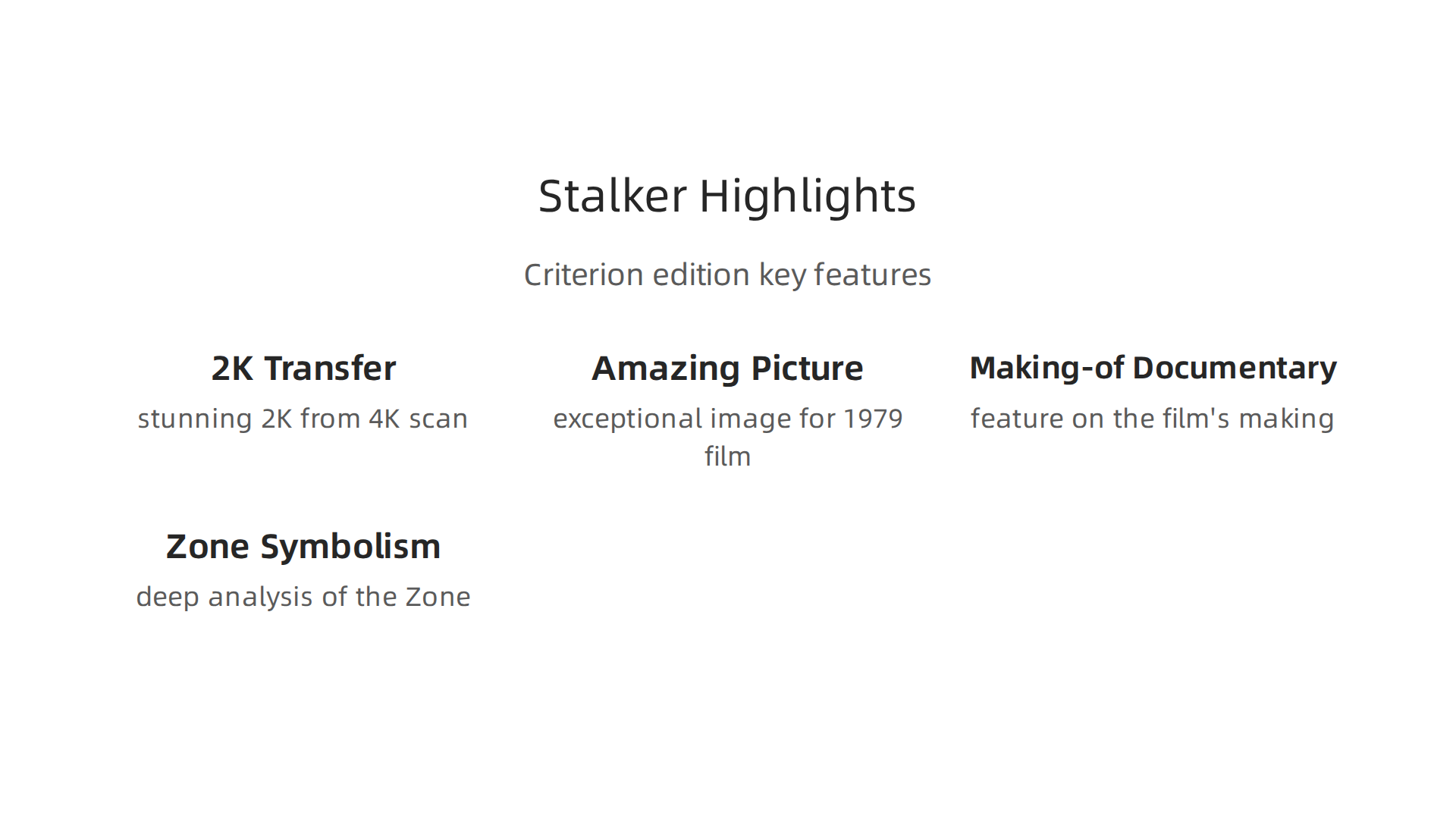
You can almost taste the damp air of the Zone. The extras are also great. There is a documentary on the making of the film and a deep analysis of the Zone’s symbolism.
If you love sci-fi fantasy movies that make you think rather than just watch, this criterion movies release is a must. It is not a seven movie collection. It is one film that feels like an entire universe. Add this eternity movie to your shelf, and you will be glad you did.
For more films that redefine what sci-fi can be, check out our guide on best sci-fi films 2026 and hidden gems you must stream.
7. THX 1138 (1971) – George Lucas’s Dystopian Debut
From the quiet dread of the Zone, we move to the cold, sterile world of George Lucas’s first feature film. You probably know Lucas for a long time ago in a galaxy far, far away. But years before Star Wars, he made something much darker. THX 1138 is a social science fiction film set in a future where emotions are forbidden and people are drugged to stay calm. Wikipedia calls it Lucas’s feature directorial debut, and it is a stark, minimalist nightmare.
The world feels empty. White walls, hidden cameras, and robotic voices control every move. The only sound is a haunting electronic score.
This is not a fun sci-fi fantasy movie. It is a serious, cerebral warning about control and the loss of humanity. Lucas’s avant-garde style, built on his student film “Electronic Labyrinth: THX 1138 4EB,” shines through every frame. One analysis notes his love for the artist’s work over the subject, which gives the film a cold precision. Bright Wall/Dark Room
Criterion’s release is a must for collectors of criterion movies. It includes both the original theatrical cut and the later director’s cut with updated visual effects. You can see Lucas tinkering with his vision decades later. The supplements dig into his early career and how this film influenced later dystopian cinema. It is one of those critically acclaimed movies that feels more relevant today than when it was released.
If this bleak future leaves you wanting something different, try a sci-fi adventure built for big laughs and big ideas. Read the absurd sci-fi adventure built for big laughs and big ideas.
For more on how visionary directors shape the genre, check out our guide on visionary directors who unlock the best sci-fi films.
8. Alphaville (1965) – Jean-Luc Godard’s Sci-Fi Noir
Now we jump from Lucas’s empty white halls to Jean-Luc Godard’s strange, dark Paris. Alphaville is not your typical space adventure. It is a sci-fi noir that takes place entirely in the real city of Paris, shot without any special sets. Godard uses neon signs, modern buildings, and rainy streets to create a futuristic world that feels eerily close to our own.
The story follows secret agent Lemmy Caution as he travels to the city of Alphaville to find a missing person. But this city is ruled by a supercomputer named Alpha 60. Emotions are banned. People speak in logical phrases. It is a cold, intellectual nightmare.
Criterion’s release of Alphaville is a must for fans of criterion movies. The edition features a new 4K restoration supervised by Godard’s cinematographer. That means the black-and-white images look crisp and moody. The supplements are great too. You get a documentary on how Godard used real Paris locations to build his futuristic world. There is also an interview with actor Eddie Constantine, who plays Lemmy Caution. It is one of those critically acclaimed movies that blends film noir, sci-fi, and French New Wave into something totally unique. If you want a sci-fi fantasy movie that feels like a puzzle, this is it.
This film is a great example of how visionary directors can remake an entire genre. For more on that idea, check out our guide on the best sci-fi films of 2026 and hidden gems you must stream.
If you love cinematic sci-fi that bends your mind, you will enjoy The Ridiculous, a story full of body-swap chaos and strange worlds. See it here.
9. Phase IV (1974) – The Cult Ant Colony Horror
Now we leave behind the human-made world of Alphaville for the Arizona desert. Phase IV is a strange, slow, and beautiful film. It is about ants that gain a collective intelligence. They start building mysterious structures in the sand. And they start fighting the humans who try to stop them.
This is one of those criterion movies that really needed the special treatment. Criterion is known for making old films look new again. Their release of The War of the Worlds (1953) uses a stunning 4K restoration that critics loved. The work on that film was so good that it made people gasp at the vibrant colors. They brought the same care to Phase IV. The macro-photography is incredible.
You see the ants in amazing detail. The final reel turns into a full psychedelic journey. The restoration is so sharp, it changes how you see the movie.
This movie is also an eternity movie. It thinks about time on a huge scale. The ants have all the time in the world. The humans only have a few days to figure out what is happening. It is a pure ecological warning. The story feels avant-garde. It plays out like a nature documentary from the future. That makes it one of the most unique critically acclaimed movies from the 1970s. It is a true sci-fi fantasy movie that does not look like anything else.
The Criterion extras are solid too. You get a making-of feature. And you get an alternate ending. This ending changes the whole tone of the story.
If you love visionary directors who take big risks, you will love Phase IV. It fits right in with other art-house sci-fi. For more on that style, check out our guide on how visionary directors can help you find your next great sci-fi movie.
10. The War of the Worlds (1953) – The Definitive Alien Invasion
From strange ants we go straight to the most famous alien invasion of all time. The War of the Worlds (1953) is the movie that set the rules for every sci-fi alien attack that came after. And thanks to Criterion, it has never looked better.
Criterion did a full 4K restoration from the original three-strip Technicolor negatives. The result is stunning. One reviewer said that seeing the vibrant restoration made them literally gasp at times. They were right. The colors are so rich, and the special effects from the 1950s feel fresh again. This is one of those criterion movies that proves restoration is an art form.
The film itself remains one of the most critically acclaimed movies in the alien invasion genre. It borrowed from H.G. Wells but created something completely new for the big screen. The death ray, the tripod machines, the panic in the streets. All of it feels real. That is why it is still a top sci-fi fantasy movie decades later.
The extras on the disc are just as good. You get a documentary about Wells’s original novel. You get the famous 1938 radio broadcast by Orson Welles. And you get a deep look at the film’s production and restoration. For a true eternity movie experience, this is essential viewing.
If you want to see how this film connects to other visionary sci-fi works, check out our guide on how visionary directors can help you find your next great sci-fi movie.
The War of the Worlds is not just a classic. It is the blueprint. And Criterion gave it the perfect treatment.
Summary
This article explains why the Criterion Collection matters for science‑fiction lovers and presents ten essential Criterion sci‑fi releases every fan should know. It shows how Criterion’s human curation, careful restorations, and rich special features preserve filmmakers’ intents and revive classics from Brazil to The War of the Worlds. Each entry describes the film’s themes, why it still matters in 2026, and what the Criterion edition adds — from 4K/2K transfers and new audio mixes to documentaries, commentaries, and alternate cuts. The piece helps readers match films to moods (satire, paranoia, philosophical meditations, ecological horror) and highlights which releases reward repeat viewings or deep study. After reading, you’ll know which Criterion sci‑fi to prioritize, what to expect from the restorations and supplements, and how these editions deepen appreciation for visionary directors and lasting genre masterpieces.