
Why Visionary Directors Matter for Sci-Fi Fans (and Everyone Else)
Have you ever spent an hour scrolling through a streaming service, unable to pick a movie? You are not alone. In 2026, a study found that 74% of people let a brand’s values guide their buying choices. The same idea works for movies. A director’s style acts as that brand.
Think about the high energy and clever twists in guy ritchie movies. You know exactly the ride you are in for. Compare that to the shocking reveals in m night shyamalan movies or the amazing worlds in a tom cruise sci fi film. A great director gives you a promise of quality.
If you love how a specific vision shapes a story, you should check out our guide to 10 Tim Burton Movies That Blend Sci-Fi and Comedy.
Understanding what a creator stands for is the best way to find your next watch. That is why we built this guide. We start with Guy Ritchie and then connect his style to the best sci-fi has to offer. For a taste of a bold new story built on a wild idea, take a look at The Ridiculous.
[Like Cinematic Sci-Fi? The Ridiculous brings body-swap chaos, strange worlds, and sharp comedy.]
Let us take a closer look at what separates a good director from a truly visionary one.
What Makes a Director ‘Visionary’?
You can feel it within the first few minutes of a film. The way the camera moves. The rhythm of the dialogue. The mood in every frame. That is a director’s personal stamp, and it is the core of what film experts call auteur theory. Simply put, auteur theory says the director is the main creative force behind a movie. Their personal style and vision shape everything you see EBSCO Research Starters. A visionary director is someone whose signature is so strong that you can spot their work without checking the credits.

What specific traits set them apart?
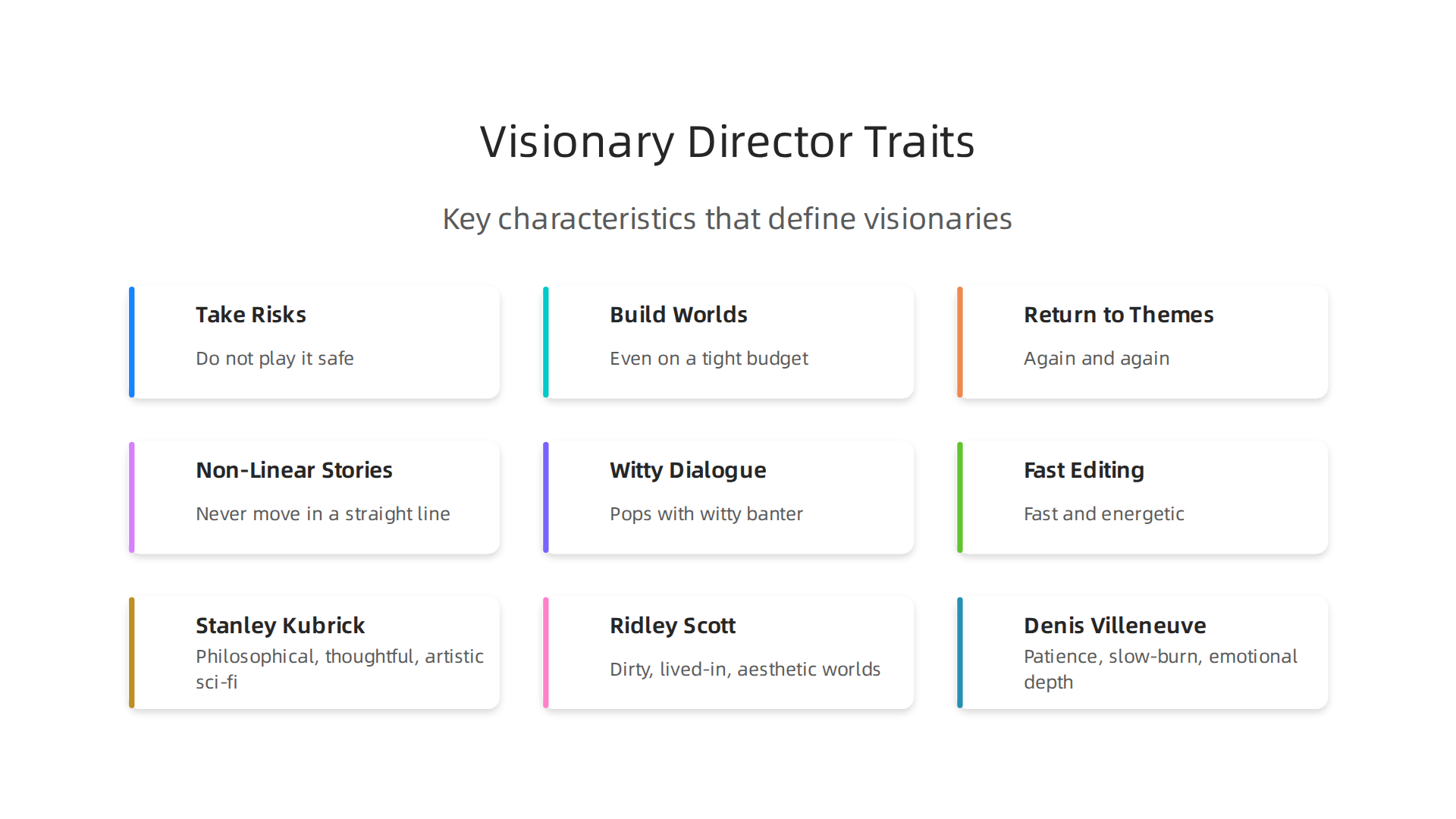
First, they take risks. They do not play it safe. Second, they build entire worlds, even on a tight budget. Third, they return to deep themes again and again. Think of the quick, sharp dialogue that defines many guy ritchie movies. The energy is unmistakable. Then compare that to the careful, almost scientific compositions of Stanley Kubrick. The concept spans every genre Dartmouth College Film Studies. It is not just about being famous. It is about having a clear, consistent vision that makes each film feel like it could only come from that one person The Independent Film School.
Some people push back on the idea of the "visionary" label. They say it focuses too much on one person and ignores the team behind every movie The Stage. There is some truth to that. A film is a group effort. But the best directors still act as the guiding light. They bring a unique point of view that ties everything together.
This is why knowing a director’s style helps you choose your next watch. If you love the snappy, clever energy of Ritchie, you already know what you are getting into.
Like the concept of a strong creative vision? The Ridiculous is a sci-fi comedy built on one wild, high-energy idea. Start with the sci-fi comedy fans say should be filmed.
Guy Ritchie: Master of the Modern Crime-Comedy
When Lock, Stock and Two Smoking Barrels hit theaters in 1998, it did not just introduce a new director. It introduced a new rhythm. That rhythm is now the standard for modern crime-comedy. Guy Ritchie took the old gangster movie and turbocharged it with sharp humor and breakneck pacing Hive.blog.
What makes his style so easy to spot?
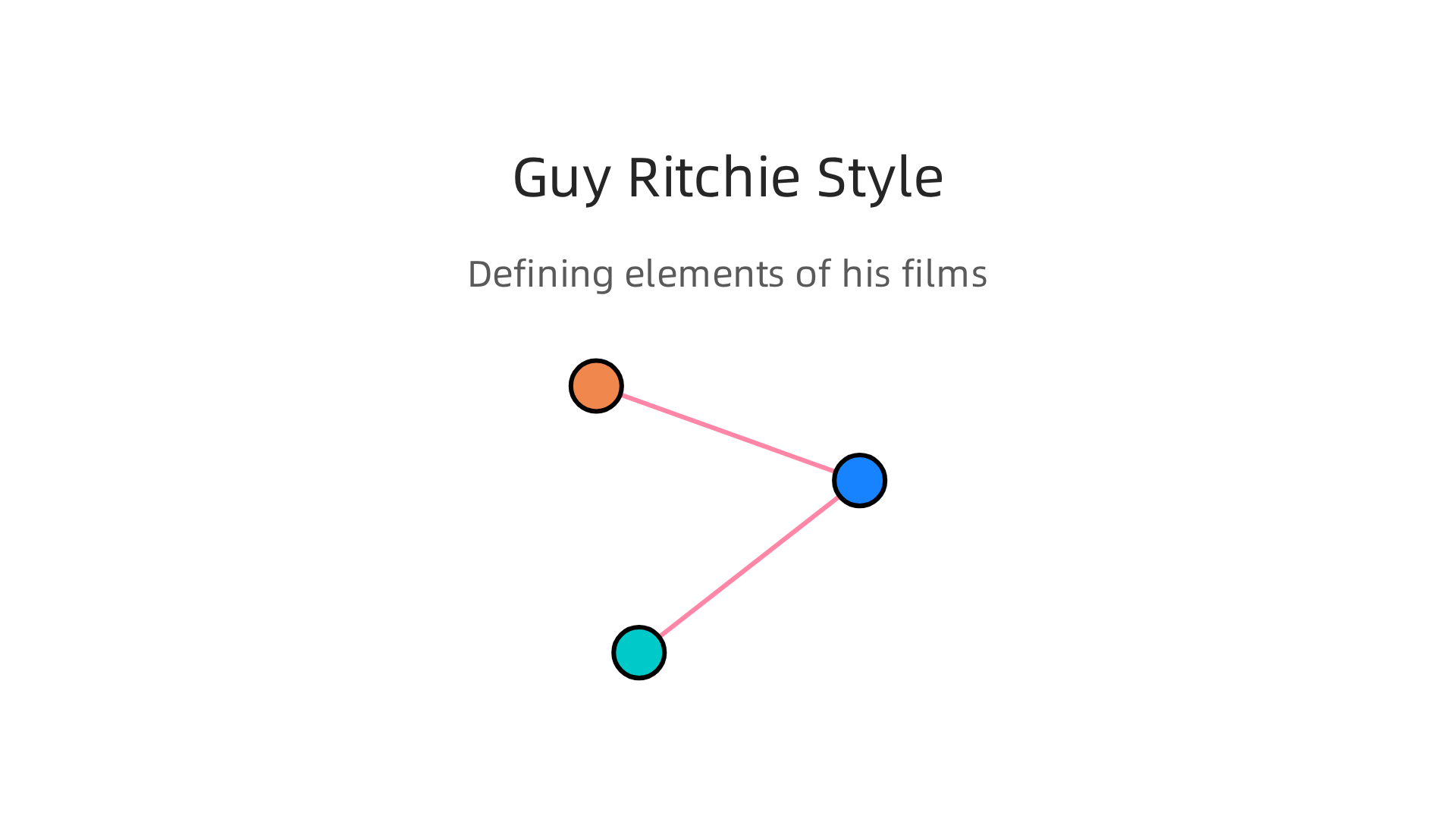
First, his stories never move in a straight line.

He loves to twist and jumble multiple plot threads together Filmustage. Second, the dialogue pops with witty banter that feels both smart and real. Third, the editing is fast and energetic. Few filmmakers have a more recognisable style Catchplay.
Here is the thing for sci-fi fans. Ritchie rarely makes space movies or tom cruise sci fi blockbusters. But his approach to world building is a masterclass for any genre. Unlike the twist-heavy worlds of m night shyamalan movies, Ritchie lays his cards on the table early. The fun is in the ride, not the reveal.
When you watch ralph fiennes movies or amanda seyfried movies directed by a visionary, you see that same confidence. A clear directorial vision turns a simple story into something memorable. That is true whether the setting is a gritty boxing ring or a distant planet.
For more films that mix humor with sharp storytelling, check out our guide to the best comedy movies that mastered satire and parody. Or, let us save you time and point you straight to titles you will love. Start with our list of best sci-fi films 2026 and hidden gems you must stream.
Fast‑Paced Narration and Non‑Linear Storytelling
Guy Ritchie’s movies never follow a straight path, and that’s exactly why they grab you. He uses fast‑paced narration, rapid montages, and fractured timelines to keep your brain working overtime. According to Filmustage, twisting and jumbling multiple storylines is a core part of his style. The snappy dialogue and rhythmic editing pull you into his world before you even realize it.
Take Snatch, for example. Ritchie weaves three separate storylines together without ever losing the thread. Each plot moves at breakneck speed, but they never feel messy. That skill is gold for any genre, especially sci‑fi. Think about directors like Christopher Nolan, who use puzzle‑box structures in films such as Inception or Tenet. Ritchie does the same thing, but with more laughs and less confusion. Unlike the twist‑heavy reveals in M. Night Shyamalan movies, Ritchie lets you see the pieces early. The fun is in watching them crash together.
Now, Ritchie doesn’t make Tom Cruise sci‑fi or big‑budget space operas. But his technique is a masterclass for anyone who loves complex storytelling. If you enjoy layered plots and sharp dialogue, you’ll appreciate how his style can translate into sci‑fi ensemble casts. For a deeper dive into movies with intricate narratives, check out our guide on Harrison Ford sci‑fi movies that lead you to hidden gems.
Ensemble Cast Chemistry as a World‑Building Tool
You know that feeling when you walk into a pub and the regulars already know each other’s orders? That’s exactly how a Guy Ritchie movie feels. He doesn’t just cast actors. He builds a repertory company. Jason Statham, Vinnie Jones, and Stephen Graham pop up again and again, and that familiarity makes his London underworld feel lived in.
When you see the same faces movie after movie, your brain relaxes. You trust these characters faster. According to Filmustage, this use of a recognizable ensemble is one of Ritchie’s hallmarks. The actors carry shorthand with each other, so the snappy dialogue lands harder. You don’t need a ten minute backstory. You just need one glance between Statham and Jones, and you know exactly what they’re thinking.
This approach to casting also builds audience loyalty. Fans follow the "Ritchie repertory" from Lock, Stock and Two Smoking Barrels to The Gentlemen. As Hive.blog notes, the quick cuts and rhythmic editing only work if the actors can keep up with that pace. Recurring players already know the rhythm.
Now think about how this applies to sci‑fi. A big ensemble like ralph fiennes movies or amanda seyfried movies often struggle to feel connected. But when you build a cast that returns across multiple films, you create instant world building. That’s why franchises like Star Wars benefit from reusing familiar actors in different roles. The audience feels like they’re visiting an old friend.
For more on how actors can anchor a genre, check out our guide to Harrison Ford sci‑fi movies.
Sci‑Fi Visionaries Who Redefined the Genre
Just as Guy Ritchie has a signature style you can spot from a mile away, some sci‑fi directors have their own unmistakable fingerprints.
Guys like Stanley Kubrick, Ridley Scott, and Denis Villeneuve didn’t just make cool spaceships and alien designs. They used the genre to ask big questions about what it means to be human.
Kubrick changed everything with 2001: A Space Odyssey. He showed that sci‑fi could be slow, thoughtful, and philosophical. The film doesn’t need a car chase to hold your attention. Instead, it makes you sit with ideas about evolution, technology, and the unknown. That approach opened the door for later directors to treat sci‑fi as serious art.
Ridley Scott followed with Blade Runner, a film that acknowledges its debt to Kubrick. Scott took the darkness and atmosphere Kubrick created and built a whole world around it. His sci‑fi felt dirty, lived in, and real. That’s why movies like Alien and Blade Runner still feel fresh decades later.
Then came Denis Villeneuve. Many critics now call him the new Kubrick of sci‑fi cinema. Look at Arrival. It’s not about fighting aliens. It’s about language, time, and grief. The emotional journey of the protagonist becomes the whole point. Villeneuve also directed Blade Runner 2049 and Dune, proving he can balance huge spectacle with deep meaning.
If you like following directors like these, you can find even more hidden gems by checking out our guide to the best sci‑fi films of 2026. And if you want a sci‑fi story that mixes big ideas with sharp comedy, take a look at The Ridiculous —a body‑swap adventure that proves the genre can be weird and wonderful at the same time.
Stanley Kubrick: The Philosophical Grandeur
Some directors make you jump. Others make you laugh. Stanley Kubrick made you think. And he did it in a way that changed sci‑fi forever.
Before Kubrick, most sci‑fi movies were simple adventures. Monsters, spaceships, and happy endings. Then came 2001: A Space Odyssey. It didn’t follow the rules. There were no big explosions. No clear bad guys. Instead, Kubrick used the genre to ask huge questions. What does it mean to be human? What happens when technology outgrows us? Is there something bigger out there?

The movie is slow on purpose. It forces you to sit with those questions. That’s why it still feels fresh today. It’s not about the destination. It’s about the journey into your own head.
Kubrick also changed how sci‑fi looks and sounds. He used classical music instead of typical film scores. You hear Strauss’s Also sprach Zarathustra and immediately feel something grand. The visual design in 2001 is clean, cold, and careful. Every shot feels like a painting. That approach created an atmosphere that no other director had pulled off before.
Here’s the thing: Kubrick’s fingerprints are all over modern sci‑fi. Directors like Steven Spielberg and Christopher Nolan have openly pointed to him as their inspiration. Ridley Scott even acknowledged his debt to Kubrick in Blade Runner. And when critics call Denis Villeneuve the new Kubrick of sci‑fi cinema, they’re saying he carries that same philosophical weight.
If you love seeing how one director’s style echoes through generations, you’ll also enjoy our guide to Harrison Ford sci‑fi movies. Ford’s work in Blade Runner and 2049 shows exactly how Kubrick’s influence keeps showing up in new places.
Ridley Scott: Aesthetic World-Building
While Kubrick made you think, Ridley Scott made you feel like you were really there. His worlds don’t just look cool. They feel lived in. Dirty. Real. And no movie shows that better than Blade Runner.
Scott’s 1982 masterpiece set the visual rules for an entire genre. The rainy streets, neon lights, and crowded multicultural cityscapes became the look of cyberpunk. As one deep dive on the film’s production design explains, Scott worked closely with art directors Lawrence Paull and David Snyder to create a future that felt both advanced and run down. The result? A world you could almost smell.
Scott is famous for his attention to tiny details. He drew his own sketches of the sets, making sure every sign, logo, and piece of trash had a purpose. That care makes his movies feel tactile. When you watch Blade Runner, you’re not just seeing a story. You’re stepping into a whole environment.
But Scott doesn’t stop at visuals. He layers his stories with meaning. Alien is a terrifying space horror, but it’s also a smart look at class and gender. Blade Runner asks what it means to be human. Scott’s directing techniques show how a director can blend genre thrills with real ideas.
If you’re ready to explore more worlds that stick with you, check out our guide to the best sci-fi films 2026 and hidden gems you must stream. Scott’s fingerprints are all over them.
Denis Villeneuve: Modern Master of Slow‑Burn Sci‑Fi
If Ridley Scott built worlds with grit and detail, Denis Villeneuve lets you live inside them. His films like Arrival, Blade Runner 2049, and Dune skip the fast cuts and loud explosions. Instead, they ask you to sit still and feel.
Villeneuve works with patience. He holds shots for a long time. He lets silence do the talking. And his sound design? It hits you right in the chest. That slow burn approach makes every moment matter. When you watch Arrival, you’re not just seeing aliens land. You’re experiencing how language can reshape time itself.
Here’s the thing about Villeneuve. He respects the source material deeply. He stayed loyal to Frank Herbert’s complex world in Dune. But he also left his own fingerprints all over it. Long takes. Minimal dialogue. A sense of awe that builds and builds. That’s his signature.
His rise matters because he showed Hollywood that a visionary director can revive a beloved sci‑fi franchise. When he took on Blade Runner 2049, a sequel nobody asked for, he turned it into a haunting masterpiece. The same production design principles Ridley Scott laid out in 1982 are here, but Villeneuve made them his own. He proved slow‑burn storytelling can work on a massive scale.
If you enjoy patient, smart sci‑fi, Villeneuve is your guide. Start with Arrival or Dune. And if you want more modern sci‑fi that takes its time, check out our guide to Harrison Ford sci‑fi movies for hidden gems you might have missed.
Common Threads: What Guy Ritchie and Sci‑Fi Directors Share
It might seem odd to compare Guy Ritchie movies with slow‑burn sci‑fi like Denis Villeneuve’s. After all, Ritchie’s world is fast‑talking London gangsters, not desert planets. But here’s the thing. Great directors, no matter the genre, all build immersive worlds.

Ritchie’s London feels just as real and lived‑in as Villeneuve’s Arrakis. That’s the auteur theory in action: a director’s personal stamp turns every film into their own universe.
Guy Ritchie movies have a signature you can spot in two minutes. Quick cuts, sharp dialogue, layered plots, and a cast of eccentric characters. He works with the same collaborators over and over, like actor Jason Statham or composer John Murphy. Sci‑fi directors do the same. M. Night Shyamalan movies rely on twist endings and long takes. Tom Cruise sci‑fi projects are built around practical stunts and high stakes. Amanda Seyfried movies often blend drama with otherworldly themes, especially when she works with visionary directors. These recurring choices create a consistent brand that fans learn to trust.
Spotting these patterns helps you find new films you’ll love. If you enjoy the layered storytelling in Guy Ritchie’s Snatch, you might also appreciate the complex plotting in Brad Pitt movies that blend multiple genres. Or if you like the controlled chaos of Ritchie’s ensemble casts, check out sci‑fi films with a similar energy.
The point is this: Whether it’s a cockney gangster flick or a spaceship epic, world‑building is world‑building. And the directors who master it leave a mark you can follow from one movie to the next.
If you love discovering why certain directors create such distinct worlds, start with this sci‑fi comedy that plays with body‑swap chaos and strange settings — it’s proof that a fresh vision can come from anywhere.
Summary
This article explains why visionary directors matter for sci‑fi fans and casual viewers alike, showing how a director’s personal style becomes a reliable guide to what you’ll get from a film. It breaks down the traits that mark a visionary—risk‑taking, consistent themes, world‑building and a recognisable visual and narrative rhythm—then uses Guy Ritchie as a case study for fast, ensemble‑driven storytelling. The piece contrasts Ritchie’s approach with sci‑fi auteurs like Stanley Kubrick, Ridley Scott and Denis Villeneuve to show how different signatures shape tone, pacing and meaning. Readers will learn how to spot directorial fingerprints, use them to find new movies they’ll love, and where to look for curated recommendations.