
You know the feeling. Friday night comes around and you open your streaming app. You scroll for ten minutes. Then twenty. Nothing grabs you.

The algorithm keeps pushing the same five safe titles at you.
It feels like the best horror movies are hiding from you. And in a way, they are.
Here is the thing about streaming algorithms. They are built for what is popular and what is safe. They struggle with niche horror. As one horror expert recently noted, the way platforms measure success almost guarantees that weird, challenging horror films get buried.
You end up watching something familiar instead of discovering something incredible.
This is why so many cult horror films fly under the radar. If you are excited for the iron lung movie adaptation, you probably already love this kind of tense, isolated storytelling. But finding similar deep cuts takes real work. The same goes for other niche corners of the genre. Maybe you love the expanding lore of the fnaf movie. Or maybe you are hunting for a clever 2000s neighborhood watch movie that doesn’t show up in generic search results. The algorithm won’t help you there.
But a human will. A 2025 study found that 52% of US streamers now feel subscription fatigue. The endless library becomes a burden without a proper guide. While platforms spoon-feed safe bets, the appetite for challenging movies that push boundaries is actually growing.
That is where this guide comes in. We built this collection to break through the noise. If you love the sci-fi side of isolated thrillers, check out our curated sci-fi film list for more immersive worlds like the iron lung movie universe. We comb through the archives and the obscure corners of the internet to find the hidden gems that algorithms leave behind.
This isn’t just a random list. It is a human-curated framework to find your next favorite weird watch. Let’s start digging.
What Makes a Horror Movie ‘Cult’ or ‘Niche’?
You have probably heard the term "cult classic" thrown around. But what does it actually mean? It is not about box office numbers. A cult film is one that strays from mainstream trends and builds a passionate, dedicated fanbase over time. As StudioBinder explains, a cult classic offers "unique perspectives or controversial themes with a niche fanbase" (source: What is a Cult Classic). These movies often fail at first. They are too weird, too slow, or too uncomfortable for wide audiences. But they stick with the people who find them.
Niche horror takes this idea and runs with it. Instead of aiming for broad scares, niche horror focuses on specific sub-genres like folk horror, cosmic horror, body horror, or supernatural chills. These films do not try to please everyone. They serve a smaller group of viewers who crave something different. The fnaf movie is a great example. It drew a huge fanbase from the game lore, not from mainstream marketing. A neighborhood watch movie with a twist also appeals to people who love clever suburban horror.
The iron lung movie fits this mold perfectly. It started as a tiny indie project with a simple, claustrophobic setting. You are trapped in a submarine in a bloody ocean with little to do but survive. No big stars. No flashy effects. Just raw tension and a deep sense of dread. That kind of film does not get pushed by the algorithm. It grows through word-of-mouth. People share it in forums, Reddit threads, and niche horror groups. That is how cult follows are born.
If you love the isolated worlds of films like Iron Lung, you can discover more similar gems by exploring our curated sci-fi film list. These are the movies the algorithm ignores but humans treasure.
When you understand what makes a film cult or niche, you stop relying on the front page. You start hunting for the strange, the uncomfortable, and the unforgettable. And those are exactly the movies that change how you see the genre.
If you are tired of scrolling and want real recommendations from someone who actually watches these films, Browse Lists to find your next favorite hidden gem.
Why Algorithmic Recommendations Fail Dedicated Horror Fans
You know the feeling. You open Netflix, Hulu, or Prime Video, and you see the same titles over and over. The algorithm thinks you want The Conjuring again or another generic slasher. But what if you are craving something like the iron lung movie? Good luck finding it through search.
Here is the problem. Streaming algorithms are not built for niche taste. They are built for engagement. They push content that keeps you watching the longest, not content that surprises you.
As iHorror explains, the way platforms measure success is almost perfectly designed to misread horror (The Streaming Graveyard). Slow-burn dread and uncomfortable atmospheres do not score high on retention metrics. So those films get buried.
You end up in a filter bubble. The algorithm repeats what you already watched, or what millions of others watched. It never takes a risk on a claustrophobic submarine horror with zero dialogue. The fnaf movie got attention because of a giant built-in fanbase. But smaller titles like the iron lung movie depend on word of mouth and human discovery. Algorithms do not reward that.
A 2025 study found that 52% of U.S. TV consumers report subscription fatigue from overwhelming content (Movie Genre Collections). You are drowning in choices but starving for the right ones. The best horror movies are often the ones that never appear on your recommended tab.
That is why human-curated lists matter. They break the machine-driven homogeneity. Instead of letting an algorithm decide what you watch, you get real recommendations from people who love the same weird, uncomfortable stuff you do. If you are tired of scrolling, consider checking out a curated sci-fi film list built by fans, not code.
The iron lung movie is a perfect example. It did not get a push from the algorithm. It grew because real people told other real people about it. That is how true cult discoveries happen. Stop trusting the machine. Start trusting the humans who dig deeper.
Browse Lists to find your next favorite hidden gem, handpicked for fans who refuse to settle.
The Iron Lung Movie: A Case Study in Modern Niche Horror
So we know algorithms struggle with weird, tense, and quiet horror films. The iron lung movie is the perfect example of this problem in action. It also shows how a film can win without any help from the machine.
Let’s look at what makes this film tick. The iron lung movie traps you in a tiny submarine deep in an alien ocean. The space is tight. The air is running out. Your mind starts playing tricks on you. It has that same uncomfortable feeling you get in films like Cube or The Lighthouse. There is no big monster. There is no loud jump scare. Just pure psychological dread.
Algorithms have no clue what to do with that.
But real people do. The film reached its audience through community, not through an algorithm. Markiplier, a massive online creator, led the project. His fanbase spread the word. But it was not just a fan film. It was a genuinely tense piece of horror. And the box office numbers proved it. The film earned nearly $40 million in North America on a $3 million budget. That is over 13 times its production cost. Worldwide, it made more than $34.2 million. A huge win for indie horror.
And here is the wild part. They did it without traditional advertising. The team leaned entirely on the online community to carry the marketing. No billboards. No expensive TV spots. Just word of mouth and genuine curiosity.
So why would an algorithm miss this?
Because it does not look like a safe bet. Compare it to the fnaf movie, which had a massive built-in mainstream audience thanks to the games. Or think about a generic neighborhood watch movie with a predictable plot. Those are easy for a machine to categorize. They hit all the right data points. But Iron Lung? It is a blend of sci-fi, survival horror, and psychological tension. It does not fit neatly into one box.
That is exactly why the best horror movies are often the ones you have to hunt for.
They live in the gaps between genres. They rely on atmosphere over action. And they depend on people, not computers, to discover. If you want to find the next Iron Lung before it blows up, you need a better source than your streaming homepage.
That is where human curation wins. We track down these strange, atmospheric, hard-to-categorize films so you do not have to scroll endlessly. If the tense sci-fi horror of Iron Lung pulled you in, there is a whole world of similar films waiting for you.
Ready to find your next obsession? Browse our custom lists for handpicked films that algorithms just cannot figure out. Start with our guide to the best hidden sci-fi films of 2026 for more deep cuts like this one.
Building a Personal Discovery Framework for Hidden Horror Gems
So you watched Iron Lung and now you want more. The hard part is finding it. Algorithms will not help you. But you can build your own system to uncover hidden horror gems. It takes a little work up front, but it pays off every time you find a movie that blows your mind.
Start with a touchstone film. Pick one movie you love. For us, it was the iron lung movie. But it could be any strange, atmospheric horror that stuck with you. Then branch out. Look at who made it. The director, the writer, the composer. Check their other work. You might find another film with the same tense, quiet energy.
Dig into sub-genres and festival circuits. Iron Lung blends sci-fi with psychological horror. That is a specific niche. Search for lists that focus on that mix. Human curated lists are your best friend. Sites like Letterboxd let you find lists made by real people, not machines.
In fact, Letterboxd will launch a curated online rental service for films that promises limited release and up-and-coming filmmakers. That is gold for finding the next Iron Lung.
Do not stop there. Festival circuits are rich with hidden gems. Sundance, Fantastic Fest, and Sitges all showcase indie horror that never gets a wide release. Follow festival coverage on blogs and podcasts. That is where you hear about films before they pop up on streaming.
Use ‘More Like This’ tools, but be smart about it. Streaming services have a "more like this" feature. It can point you somewhere useful. But take it with a grain of salt. Cross reference any suggestion with human sources. Check Reddit threads that ask for recommendations. Read a few reviews. If the algorithm says "try this horror film" but it is a mainstream jump scare fest, skip it. You want the quiet, uncomfortable stuff.
Document your watch history. This is the secret weapon of serious film fans. Keep a simple list. Every time you watch something, write down the title, year, and a few notes. What did you like? What genre does it fit? Over time, you will spot patterns. You might realize you love ocean based horror or films with single location tension. That makes your next search faster.
A great approach is to set clear intentions for each movie night and rotate between sources. Do not always use the same method. One week you use a curated list. Next week you ask a friend. The week after you try a festival roundup. This keeps your discovery fresh.
Put it all together. Here is a simple framework you can use tonight:
- Pick your touchstone (like Iron Lung).
- Find the director’s other films.
- Search a human curated list for similar sub-genres.
- Check festival recommendations.
- Use ‘more like this’ as a starting point, then verify.
- Add everything you watch to your personal log.
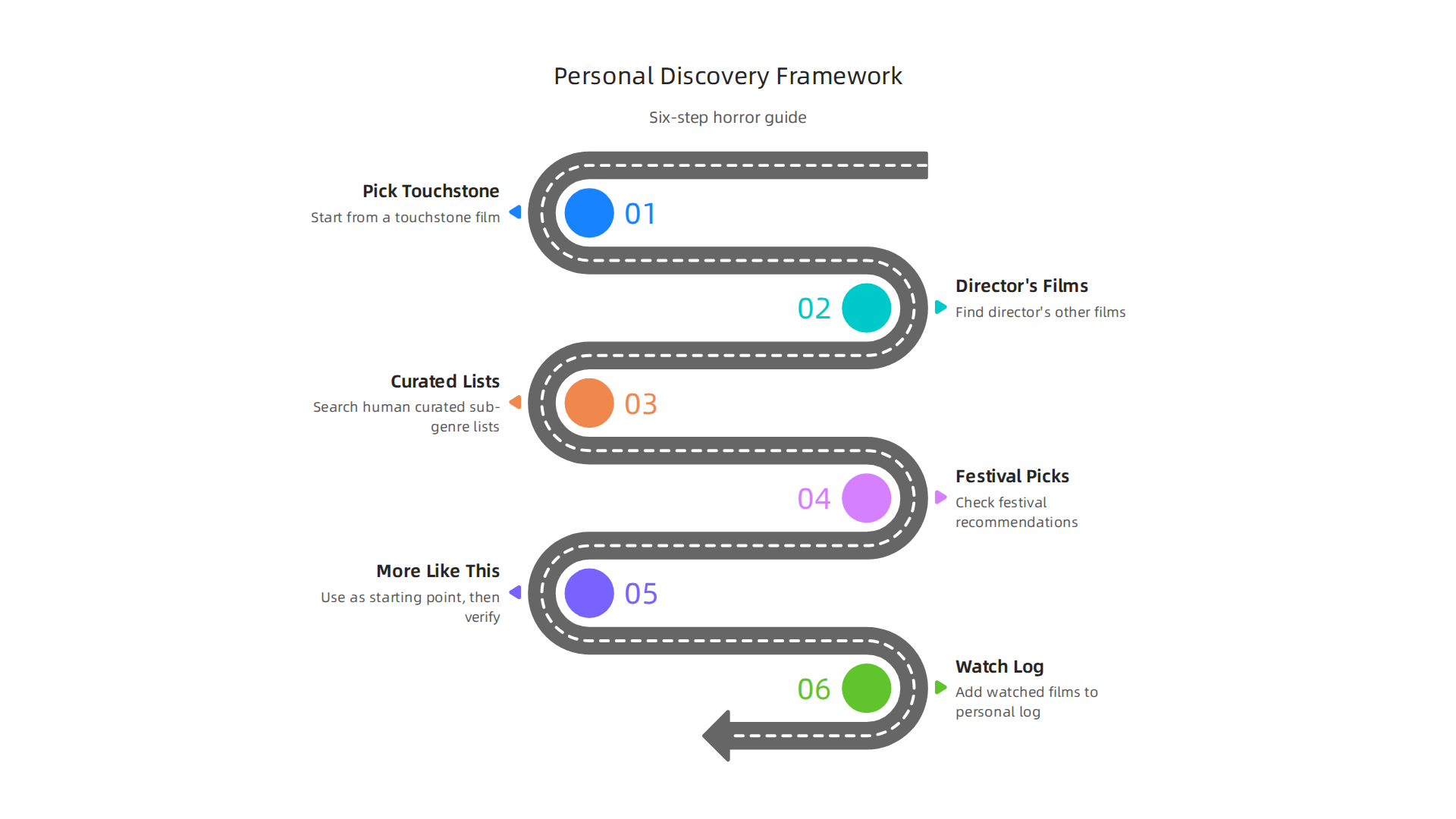
This system works because it is based on human taste, not machine data. You are training your own eye. Over time, you will get better at finding the best horror movies that fly under the radar. You will discover films that feel like they were made just for you.
If you want a shortcut to get started, browse our handpicked lists. We have done the digging for you. Start with our guide to the best sci-fi films of 2026 and hidden gems to find more atmospheric, mind bending movies. And when you need a break from horror, check out our curated comedy guide for something lighter.
Ready to take control of your movie night? Browse our custom lists and start building your personal discovery framework today.
Where to Find Human-Curated Lists and Expert Analysis
Your personal discovery framework is solid. But you still need good sources to feed it. Algorithms won’t cut it. You need human curation. Experts who watch hundreds of horror movies a year and know the difference between a hidden gem and a dud. Here is where to find them.
Specialized horror blogs and websites. There are hundreds of active horror blogs run by passionate fans and critics. A great way to start is to browse the best horror blogs ranked by FeedSpot. These sites cover everything from obscure indie shorts to festival breakouts. They write deep dives, review niche releases, and often highlight films that never hit mainstream streaming.
Newsletters and Substack writers. Some of the sharpest horror analysis lives in people’s inboxes. Substack has a thriving film community. You can find a full list of top film and TV newsletters on Substack. Many writers focus entirely on genre films. They send weekly picks, essays, and hidden gems straight to you. No algorithm. No noise. Just one person’s well honed taste.
Annual "best of" lists from genre critics. These lists are gold. Critics who watch everything often include strange, overlooked titles that you would never find on your own. For example, GNofHorror’s best horror movies of 2025 list includes honourable mentions from festivals and limited releases. Similarly, Stephanie Graves shared her favorite horror films of 2025 with a thoughtful ranking that pulls in deep cuts. When you read a few of these lists back to back, you start to see patterns. The same hidden names keep popping up. That is your next watchlist.
Festival coverage and programs. The best horror movies often debut at festivals like Sitges, Fantasia, and Sundance. Following festival programs and submission guides gives you a preview of what is coming. Adrian Tofei’s list of top 110 genre film festivals is a huge resource. You can use it to track upcoming films before they get distribution deals.
How Iron Lung itself gained traction. The film didn’t have a big marketing budget. It spread through word of mouth on horror focused forums, subreddits, and niche review sites. People who loved the atmospheric, claustrophobic tension told their friends. They posted about it in Facebook groups and Discord servers. That human to human recommendation is exactly what you need to find the next film like it.
You can also use a smarter approach by rotating between different sources each week. One week you read Substack newsletters. The next you scan festival reports. Another you dive into a critic’s annual list. This keeps your discovery fresh and wide.
If you enjoyed the iron lung movie and want more films with that same quiet dread, start with our handpicked guide to the best sci-fi films of 2026 and hidden gems you must stream. Many of those picks lean into psychological horror and single location tension, just like Iron Lung.
Ready to find your next favorite film? Browse our curated lists and let human taste guide your movie night.
Leveraging Streaming Platform Hidden Filters and Third-Party Tools
You have a solid list of human curated sources now. But what if you could make your streaming platforms work harder for you? Most people just browse the home screen. They see the same 20 titles over and over. The truth is every major platform has hidden filters that can unlock thousands of niche categories. Combine those with third party tools, and you get a discovery machine.
Let’s start with Netflix. You probably know that Netflix uses a strange category system. It assigns every show a numeric code. By typing certain numbers into the URL, you can access subgenres that never appear in the normal menu. For 2026, there is a complete updated list of Netflix secret codes that covers everything from "Cult Horror Movies" to "Mind-Bending Sci-Fi." To use one, just go to netflix.com/browse/genre/CODE and replace CODE with the number. For example, code 7545 gets you straight to "Psychological Horror." If you loved the iron lung movie and want more claustrophobic dread, start there.
Other platforms have similar tricks. Amazon Prime, Hulu, and HBO Max all have hidden tag systems and mood filters. They just don’t advertise them. A quick search for "hidden categories on [platform]" usually reveals a list. These filters let you drill down by tone, pace, or even specific elements like "jump scares" or "dystopian futures."
Now add third party aggregators. Tools like JustWatch and Reelgood let you search across every streaming service at once.
But the real power is in their advanced filters. You can sort by release year, IMDb rating, Rotten Tomatoes score, and even niche tags like "single location" or "slow burn." This is where your human curated lists become gold. Take a recommendation from a critic’s annual roundup. Then plug it into JustWatch to see where it streams and find similar titles by mood.
Here is how the workflow works in practice. You read a Substack writer’s list of the best horror movies of the year. You see one called The Neighborhood Watch (a made up example, but imagine). You search for that film on JustWatch. You then use the "More Like This" feature and filter by "psychological horror" with a rating above 7.0. Suddenly you find five films you never heard of, including a hidden gem that feels just like the iron lung movie.

No algorithm guesswork. Just targeted discovery.
These same tricks work for any genre. If you want a break from horror and crave something light, use the same approach with comedy. Our curated guide to the best comedy movies across every subgenre shows you how hidden filters can uncover classic screwball comedies or modern absurdist gems.
The best part? You can rotate your tools weekly. One week use Netflix secret codes. The next week combine a critic’s list with JustWatch filters. The week after, dive into a single platform’s unadvertised mood tags. By mixing human taste with technical shortcuts, you break free from the algorithm entirely.
Ready to put this into practice? Browse our curated lists and let human taste guide your next movie night.
From Cult to Mainstream: The Lifecycle of Niche Horror
You now know how to find hidden gems using secret codes and smart filters. But here’s the thing: some of those hidden gems don’t stay hidden forever. Every once in a while, a niche horror film breaks out of the underground and lands in the mainstream. Understanding how that happens helps you get ahead of the curve. You can spot potential breakouts early and watch them before everyone else catches on.
A cult classic is a film that strays from mainstream trends and builds a dedicated, passionate following over time, often through word of mouth and repeat viewings. The iron lung movie fits that description perfectly. It started as a small indie project with a weird premise. Through festivals, online buzz, and a devoted fan base, it gradually moved closer to the mainstream. This lifecycle is not random. It follows a pattern.
The typical path looks like this:
- Festival debut. The film premieres at a niche genre festival like Fantastic Fest or Sitges. A small group of critics and superfans see it first.
- Cult following forms. Those early fans talk about it on forums, Reddit, and social media. They create memes, fan theories, and watch parties. The film develops "replay value and emotional depth that invites analysis and discussion," as one definition of cult film explains.
- Viral moment or licensing deal. Suddenly a big streaming platform picks it up. Or a famous director tweets about it. Or a fan theory goes viral. That’s the turning point.
- Mainstream attention. Now casual viewers discover it. The film shows up on "best horror movies" lists. It becomes a recommended title on Netflix.
Think about the FNAF movie. That property was already a cult video game phenomenon. When the film finally dropped, it exploded because the fan base had been waiting for years. The iron lung movie had a similar arc: a small but vocal community pushed it forward until mainstream outlets took notice.
You can use this knowledge to predict what might break out next. Watch festival lineups each year. Track which indie horror films earn the loudest buzz on Reddit or Letterboxd. Then use the search tools from the previous section to find those films early. If you want a break from horror, apply the same logic to sci fi or comedy. Our curated guide to the best sci-fi films of 2026 and hidden gems you must stream highlights several festival breakouts that are now gaining traction.
By staying ahead of the lifecycle, you never have to wait for the algorithm to tell you what is good. You discover it yourself.
Browse curated lists and let human taste guide your next movie night.
Summary
This article explains why streaming algorithms favor safe, high‑engagement titles and often hide the best niche horror films, using Iron Lung as a concrete example. It defines what makes a movie ‘cult’ or ‘niche’, shows how Iron Lung reached audiences through community rather than platform discovery, and gives a step‑by‑step framework you can use to find similar hidden gems. You’ll learn where to look—festivals, Substack writers, Letterboxd lists, and horror blogs—how to use Netflix secret codes and aggregators like JustWatch or Reelgood, and how to document and refine your taste. The guide also outlines the typical lifecycle from festival debut to mainstream breakout so you can spot rising cult hits early. By following the practical checklist and rotating discovery sources, you’ll spend less time scrolling and more time watching memorable, off‑beat horror.